
Services & Rates
- » One Hour session
- » 90 Minute session
- » 2 Hour Session
- » Swedish Massage
- » Deep Tissue Massage
- » Myofascial Release
- » Trigger Point Therapy
- » Cupping
One Hour session
All massages are tailored to individual needs. Different techniques will be utilized during the course of your massage to achieve the desired results. The modalities/techniques are described in the following menu of services
One hour may not be sufficient to allow a full body experience. We will discuss your specific needs and tailor the work to the necessary zones.
When an individual has chronic muscle contraction due to repetitive motion or repetitive posturing, a one hour session may be required for optimal targeted therapy. (for example: all upper body or all lower body focus)
90 Minute session
Many times an individual is experiencing significant muscle issues such as adhesions, spasm and trigger points. These issues usually require additional time and attention. When a full body massage is desired with the intent of addressing chronic or acute issues, a 90 minute session is advised.
Swedish Massage

Swedish Massage is a very relaxing and therapeutic style of bodywork. It combines oils or lotion with an array of strokes such as rolling, kneading, and percussion to help the body improve its circulation. The benefits of this type of bodywork are wide-ranging and include relief from aches and pains, decreased stress levels in the body, enhanced mental clarity, improved appearance, and greater flexibility.
Deep Tissue Massage

Deep Tissue Massage is a form of bodywork that aims to relieve tension in the deeper layers of tissue in the body. Deep Tissue Massage is a highly effective method for releasing chronic stress areas due to misalignment, repetitive motions, and past lingering injuries. Due to the nature of the deep tissue work, open communication during the session is crucial to make sure you don't get too uncomfortable. Keep in mind that soreness is very common after the treatment, and that plenty of water should be ingested to aid with the flushing and removal of toxins that will have been released from the deep tissue during the session.
Myofascial Release

Myofascial release is a form of soft tissue therapy intended to eliminate pain, increase range of motion, and rebalance the entire body. It does this by using massage techniques to stretch the fascia and release the bonds that exist between the fascia, muscles and bones. Fascia is the connective tissue that connects and covers all muscles, organs, and skeletal structures of the body. Direct myofascial release is sometimes known as deep tissue work. Indirect release applies light pressure and gently stretches the fascia; this allows for increased blood circulation and relief from pain.
Trigger Point Therapy

Trigger Point Therapy is a style of bodywork that focuses on stimulating and releasing "trigger points" in your body. Trigger points are tender areas of tension similar to acupressure points, except they occur in the belly of the muscle rather than along the energy pathways of the body. These "knots" are built up throughout a person's life due to physical, mental, and/or emotional stress. During a session, focused pressure is applied through a variety of techniques in order to release your trigger points. This process can be somewhat uncomfortable at times, yet the effects are lasting and profoundly transformative.
Cupping
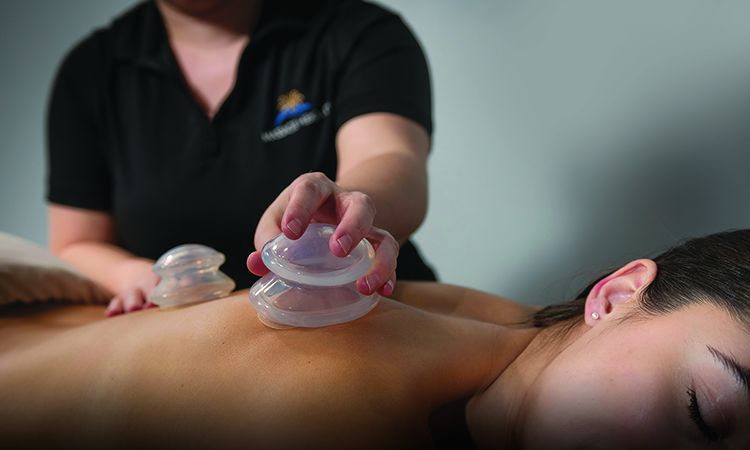
Cupping is a type of alternative therapy that originated in China. It involves placing cups on the skin to create suction. The suction may facilitate healing with blood flow. I use an improved silicone cupping set.
Cupping increases blood circulation to the area where the cups are placed. This may relieve muscle tension, which can improve overall blood flow and promote cell repair. It may also help form new connective tissues and create new blood vessels in the tissue. Some light to heavy discoloration may develop in the areas where cupping is utilized. This discoloration dissipates after a few days.
The muscle fibers are drawn up and away from adjacent tissues to aid in releasing formed adhesions within the muscle fibers.
I use cupping as an additional tool during a regular massage session (with client permission) to aid in achieving quicker muscle tension relief.